What is a DUI? What’s the difference between DWI and DUI?
By: William C. Head, a criminal defense attorney and DUI lawyer in Georgia since 1976, wrote this article. The article discusses arrests for DUI-DWI.
Understanding the distinction between a DUI and DWI can be perplexing for non-lawyer readers. Because the United States is the world’s only country that lacks a UNIFORM, single phrase, and acronym for “drunk driving.” For example, Great Britain calls their law, “drink driving,” while Canada uniformly calls it “impaired driving.”
All jurisdictions separately legislate their own state drunken driving laws. Thanks to the NHTSA’s programs, all states will have the same impaired driving laws by 2024.
NHTSA, founded in 1970, is also responsible for “suggesting” that law enforcement use “field sobriety tests” while still at the roadway. Although a couple of states now have passed statutes saying that a person suspected of DUI must participate, these laws may be unconstitutional. In most states, the best response is to not attempt these bogus “sobriety” evaluations.
All states have laws against driving while under the influence of drugs or alcohol. One punishment suggested by NHTSA was to perform many community service hours, and all states followed this suggestion.
What does DUI Stand For?
The acronym stands for “driving under the influence.” Yet, some state legislatures thought that “driving” was too narrow of a term, since their laws allowed those who were operating (or riding upon) any type of device or animal.
DUI might refer to operating a vehicle while affected by alcohol, or it could signify driving while under the influence of drugs. These drugs might be legal, prescribed, or illicit. Conversely, DWI could denote driving in a state of intoxication or driving while your abilities are compromised. The exact interpretations are contingent on your state’s regulations.
A DUI or DWI charge is issued when a law enforcement officer has gathered enough evidence of impairment to believe a motorist was unfit to drive, regardless of the local acronym or terminology describing the crime in that state. This unfitness to drive can be to ingest alcohol, drugs, or noxious vapors (“huffing”) creating fatigue or a diminished capacity to drive.
So, states like Maine, Massachusetts, and Rhode Island use OUI, for “operating under the influence” as their state’s driving impaired abbreviation. Other states, like Michigan, Wisconsin, Iowa, and Indiana use OWI (operating while intoxicated) to align with their states operating impaired laws.
but they are not identical in states that acknowledge both offenses. DWI is an acronym for either “driving while intoxicated” (as defined in North Carolina) or “driving while impaired” (as under Texas law) whereas DUI is an abbreviation for “driving under the influence.”
Find A DUI Lawyer In Your State
Click or touch your state to find the top-rated DUI lawyers near you.
DDD’s list of top DUI attorneys can help you understand your state’s DWI vs DUI laws for alcohol or drug arrests. The text discusses the differences between DWI and DUI charges and their impact on car insurance.
Another example can be found in the Palmetto State. Lawyers in South Carolina use “DUAC” which stands for “driving with an unlawful alcohol concentration.”
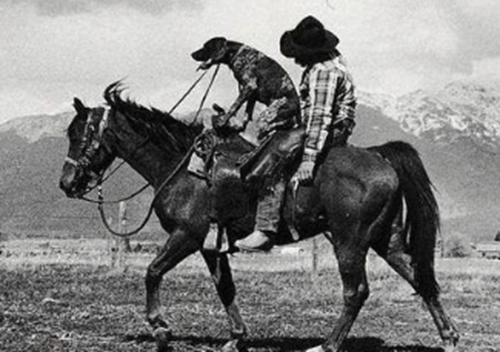
This lack of uniformity (from state to state) also extends to differences in whether a non-motorized vehicle, like a bicycle, a mule, a horse, a cow, or a unicycle is a “vehicle” for purposes of triggering intoxicated driving laws. So, the trick is to look in which state your arrest took place and find out what that State’s operating under the influence laws prohibit, and then you’ll know “what’s a DUI in X state.”.
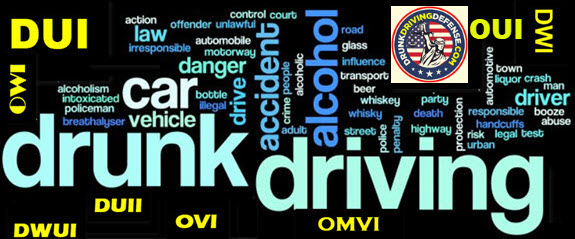
Taking a poll of the 50 states plus the District of Columbia, roughly 40 jurisdictions (+/- 80%) use either “D.U.I.” or “D.W.I.” as their preferred acronym. OVI (Ohio), OUI, OWI, DUII (Oregon), and DWUI (Wyoming) are the other DUI/DWI acronyms used in America.
The Advent of “Per Se” DUI Laws: Having an Illegally High BAC Level
Additionally, because all states have enacted multiple different ways that a person can violate their driving impaired laws, other acronyms have popped up. For over half a century “per se” DUI vs DWI laws have existed.
This law permits an “operator” of a vehicle to be charged with this driving intoxicated traffic crime merely having a prohibited level of alcohol in your system and being in that vehicle is a crime. Most states require that drivers prove recent driving and an unlawful BAC level to be eligible for coverage of occupied, stationary vehicles with the engine turned off.
In 1988, President Ronald Reagan required additional mandates from NHTSA, relating to laws controlling those driving drunk. Read this information from that directive below:
“In 1988, Congress created the Section 410 program. To qualify for a basic grant under the Section 410 program, states were required to meet five out of seven criteria.”
“One of these seven criteria was the enactment of a per se law. Furthermore, to qualify under this criterion, during the first three years that a state received section 410 basic grant funding, the illegal limit had to be set at .10 BAC or lower. “

In the last few months of his tenure in 2000, President Bill Clinton endorsed a directive from NHTSA to enforce a per se DUI alcohol limit of 0.08 grams percent for adults. All states eventually complied. These types of “lame duck” actions are common for presidents to authorize when not running for re-election.
For example, NHTSA originally suggested in the early 1970s that jail time be mandatory (even for a 1st offense DUI) when a convicted driver’s alcohol level exceeded the legal limit. In 2024, the nationwide adult BAC limit is now 0.08 grams percent in all states except Utah. That state decided to lower the adult alcohol level (in 2021) to 0.05 gr. %
For many years, however, this mandate did not exist, and states like Georgia once had its per se DUI legal limit at 0.15 gr percent in the 1970s, but then dropped it to 0.12 grams %, and later to 0.10 gr. %. Now the Peach State lowered its adult BAC limit to 0.08 grams percent in 2001, under former Governor Roy Barnes.
Remember, in many states, you can get in trouble for drunk driving even if your car isn’t moving. This applies to other vehicles like electric scooters or bikes, watercraft, mopeds, bicycles, and riding lawnmowers, too. You could face charges like DUI or DWI for being in control of these vehicles while under the influence.
For example, federal guidelines also require every state to impose an immediate license suspension or revocation upon any conviction. In addition, federal laws mandate that repeat offenders be much more harshly punished than first offence DUI defendants. Also, many decades ago, the federal government required all states to enact driving under the influence of drugs statutes.
Yet, as you will learn below, a DWI charge in the Lone Star state is not defined the same way as a DWI offense in the Tar Heel State. Plus, other acronyms have emerged to provide a shortcut manner of identifying a “type” of obtunded driving crime within that jurisdiction.
As you will read below, “what does DUI mean” is a question that each state defines and codifies in its specific laws. The Great Lakes State, Michigan, uses OMVI as a shortcut method of identifying their “operating while being visibly impaired by alcohol or a controlled substance” statute.
More Resources About "What Is A DUI?"
If you’d like to learn more about “What Is A DUI” read through some of our helpful articles below. We dive into several different aspects of DUI charges.
More DUI FAQ Resources
To learn more about frequently asked questions about DUI, read some of our informative articles below. We cover some of the most common FAQs about DUI below.
Find The Top-Rated DUI Lawyers Near You
We have listings for the top DUI lawyers in all 50 states and the District of Columbia. Find the best DUI lawyer for you by clicking on your state here.